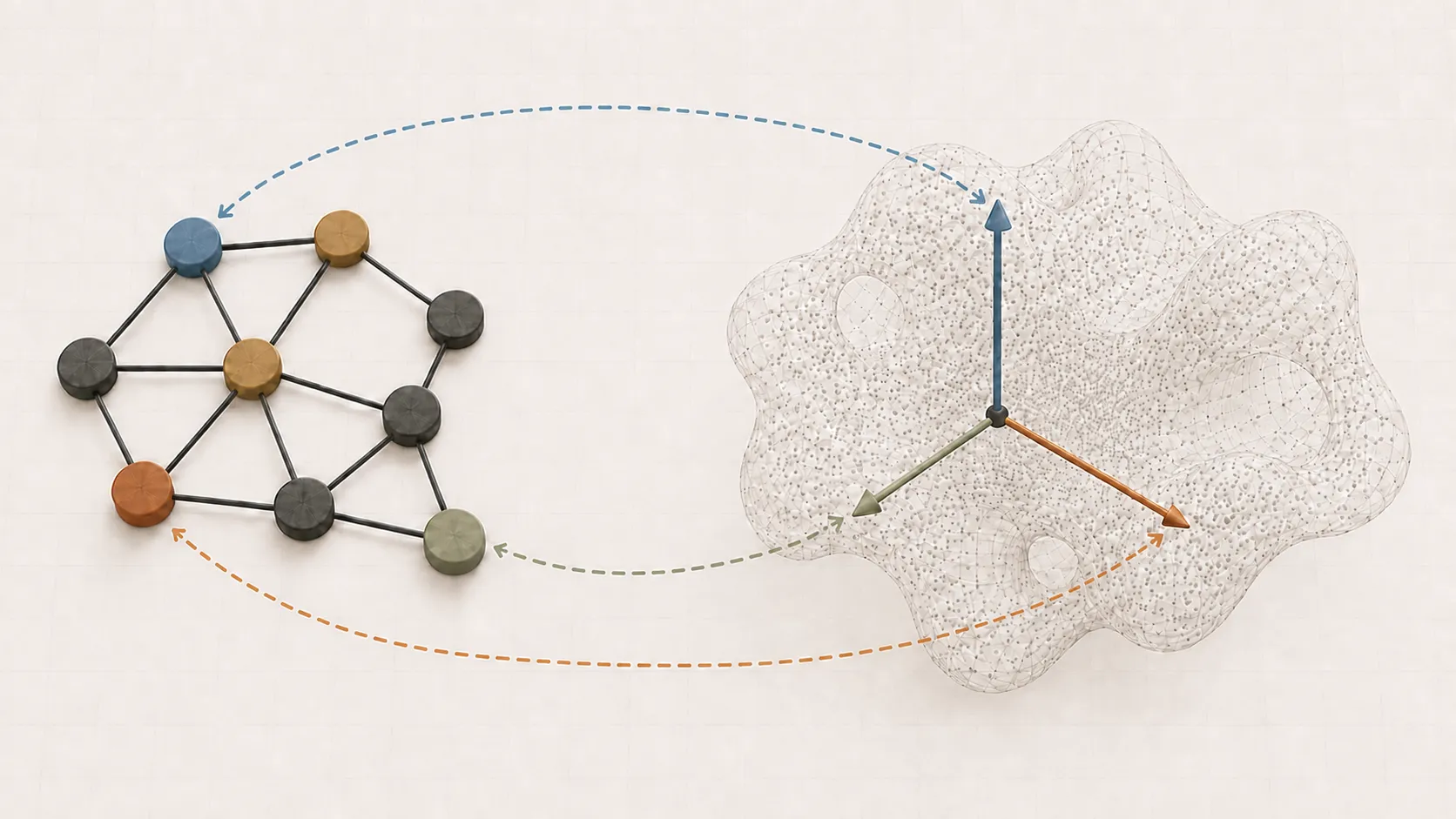
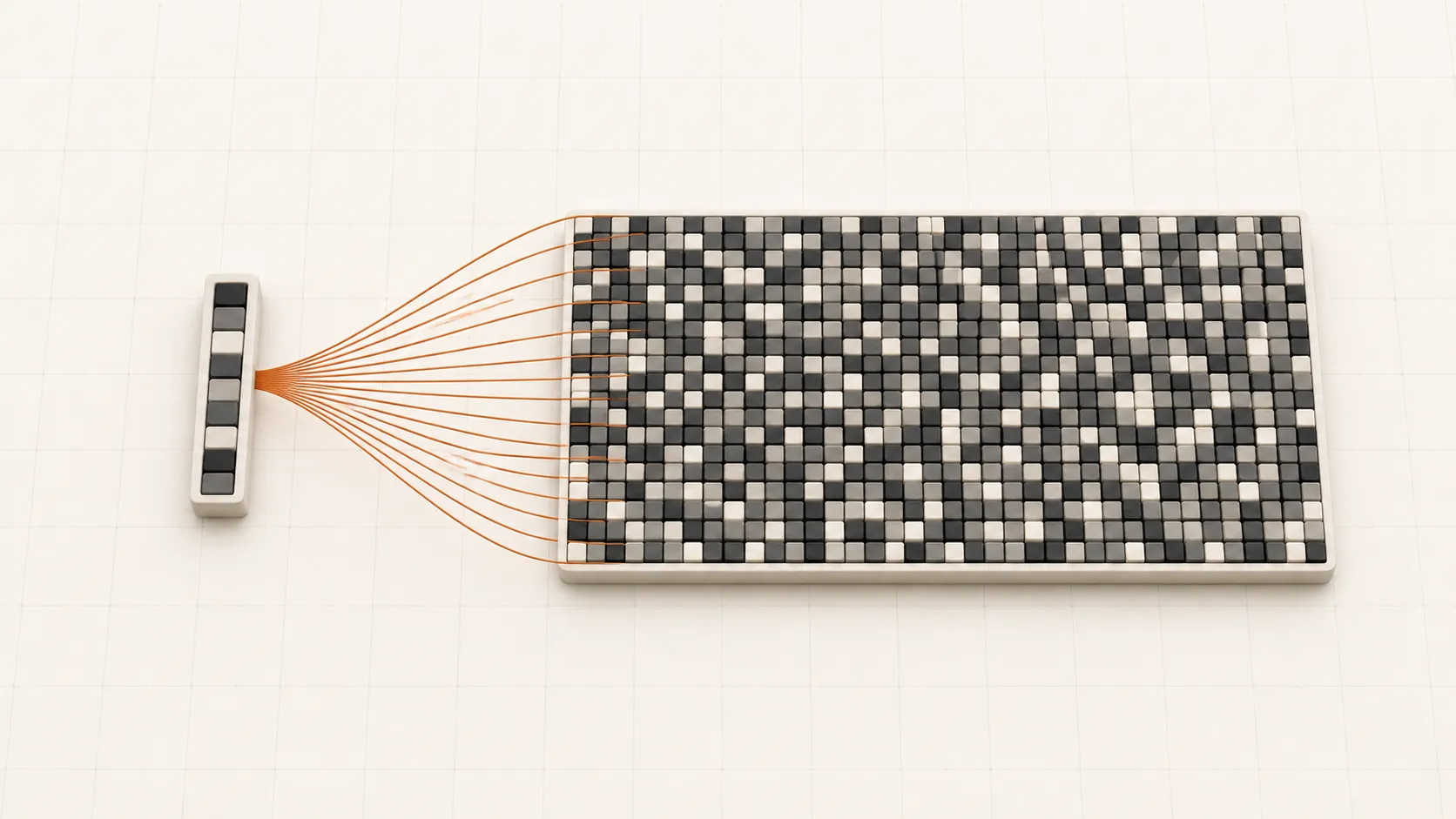
Semantic compression inside wide hypervectors
How a compact abstraction can use thousands of coordinates, and what the extra width buys an HDC system.
Blog
Explore everything we publish, from practical use cases and approachable HDC concepts to research perspectives and implementation.
How a compact abstraction can use thousands of coordinates, and what the extra width buys an HDC system.
Learn how to encode node properties and edge direction with HDC, compose a partial query, and resolve similarity matches back to exact graph records.
A delayed sales order shows how searching connected patterns could help teams find useful past cases, then check the facts in a graph.
A warehouse robot's detour shows how connected evidence and HDC memory could help AI reuse experience while checking what is valid now.
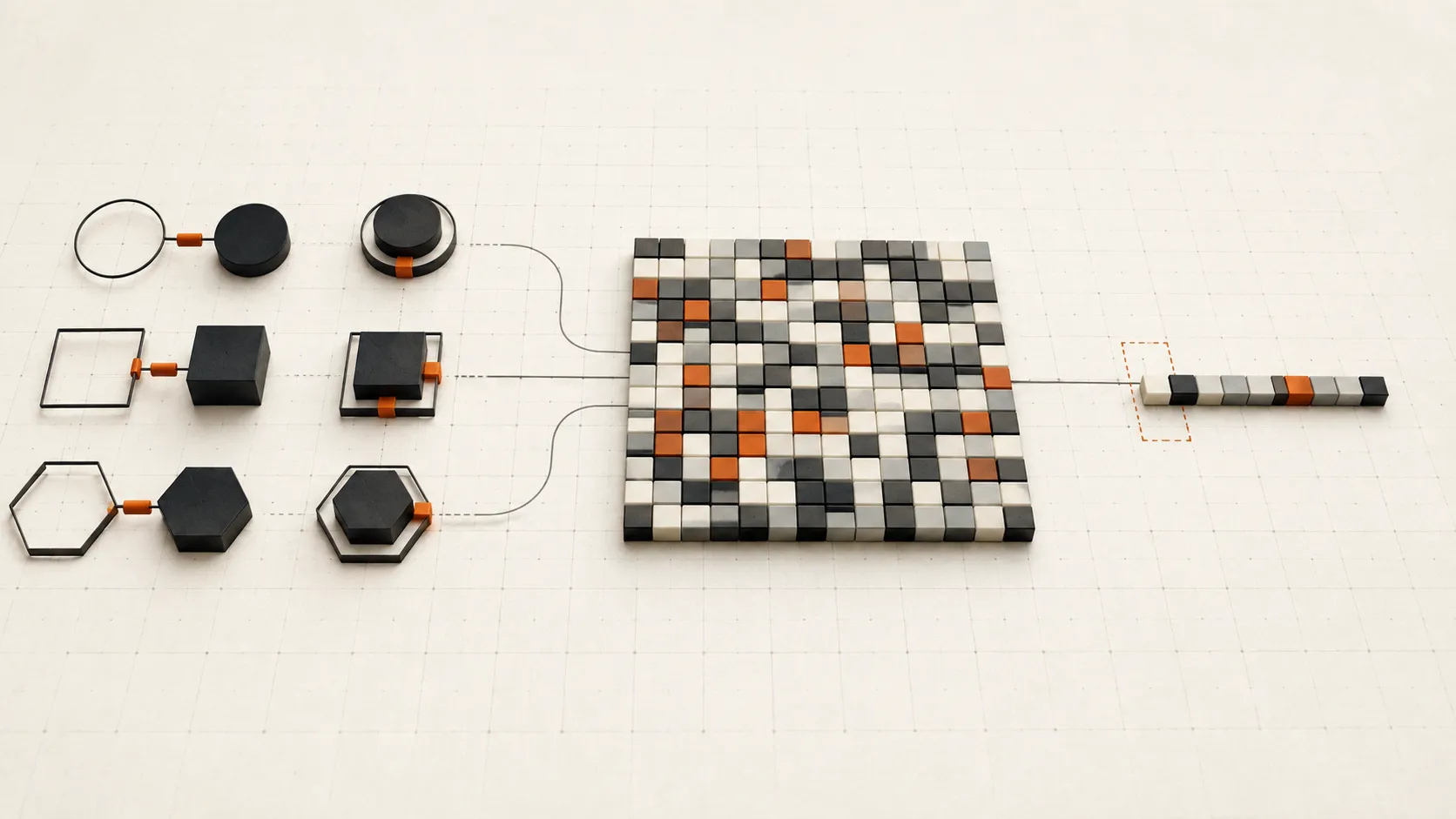
Five MAP experiments explore how bundled hypervectors support semantic retrieval, explainable scores, query preferences, and removal of known facts.
What a new neuroscience framework proposes about context, compression, and action, and how HDC could turn those ideas into a computational architecture.
A critical review of PhotoHDC's modeled electro-photonic accelerator, what its evidence supports, and how OLIX and recent optical HDC work sharpen the deployment question.
New to HDC? Start with these four introductions.
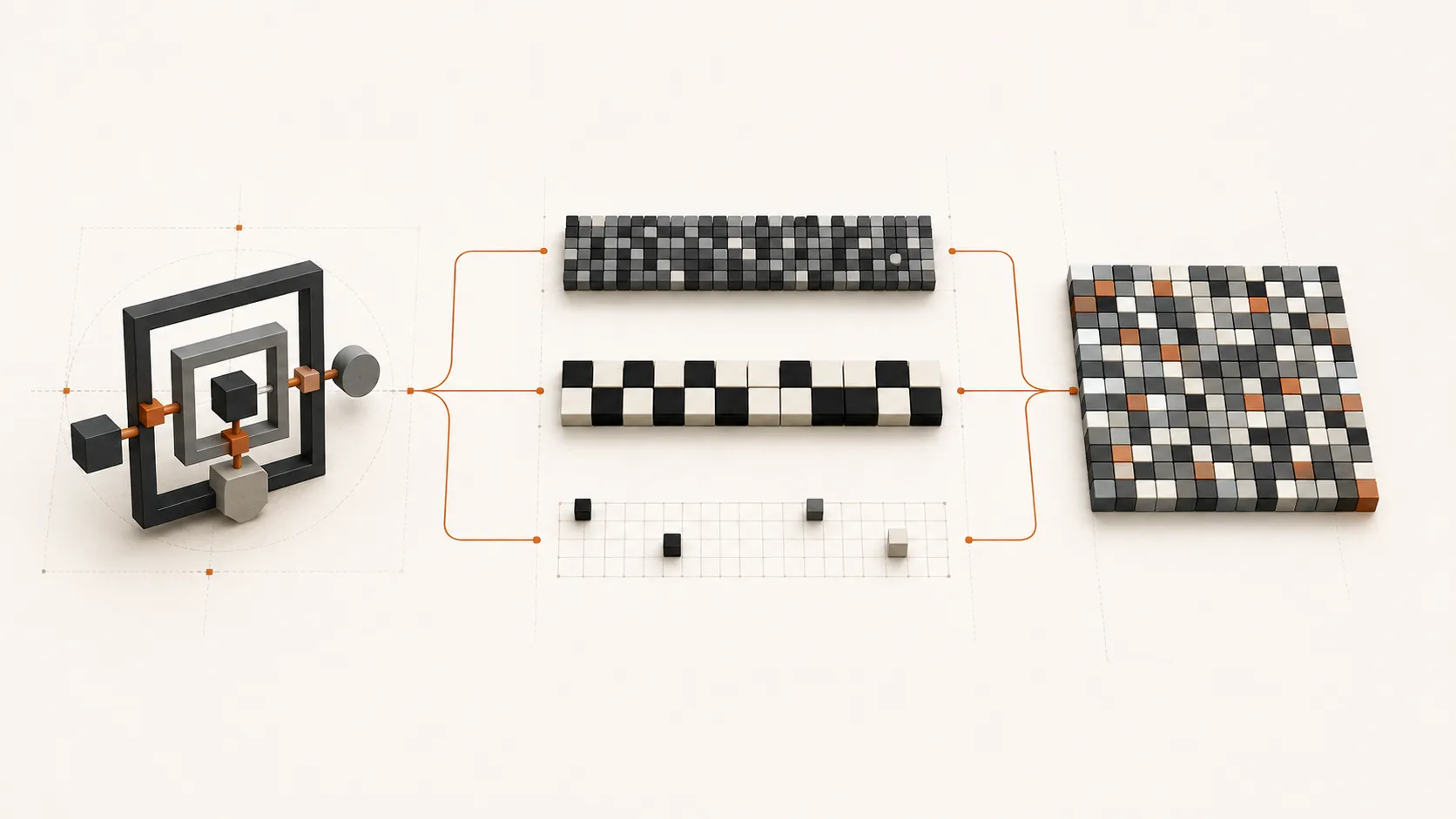
A gentle introduction to how hyperdimensional computing represents, combines, and retrieves information using high-dimensional hypervectors.
A closer look at the high-dimensional, distributed mathematical objects that give hyperdimensional computing its unusual geometry.
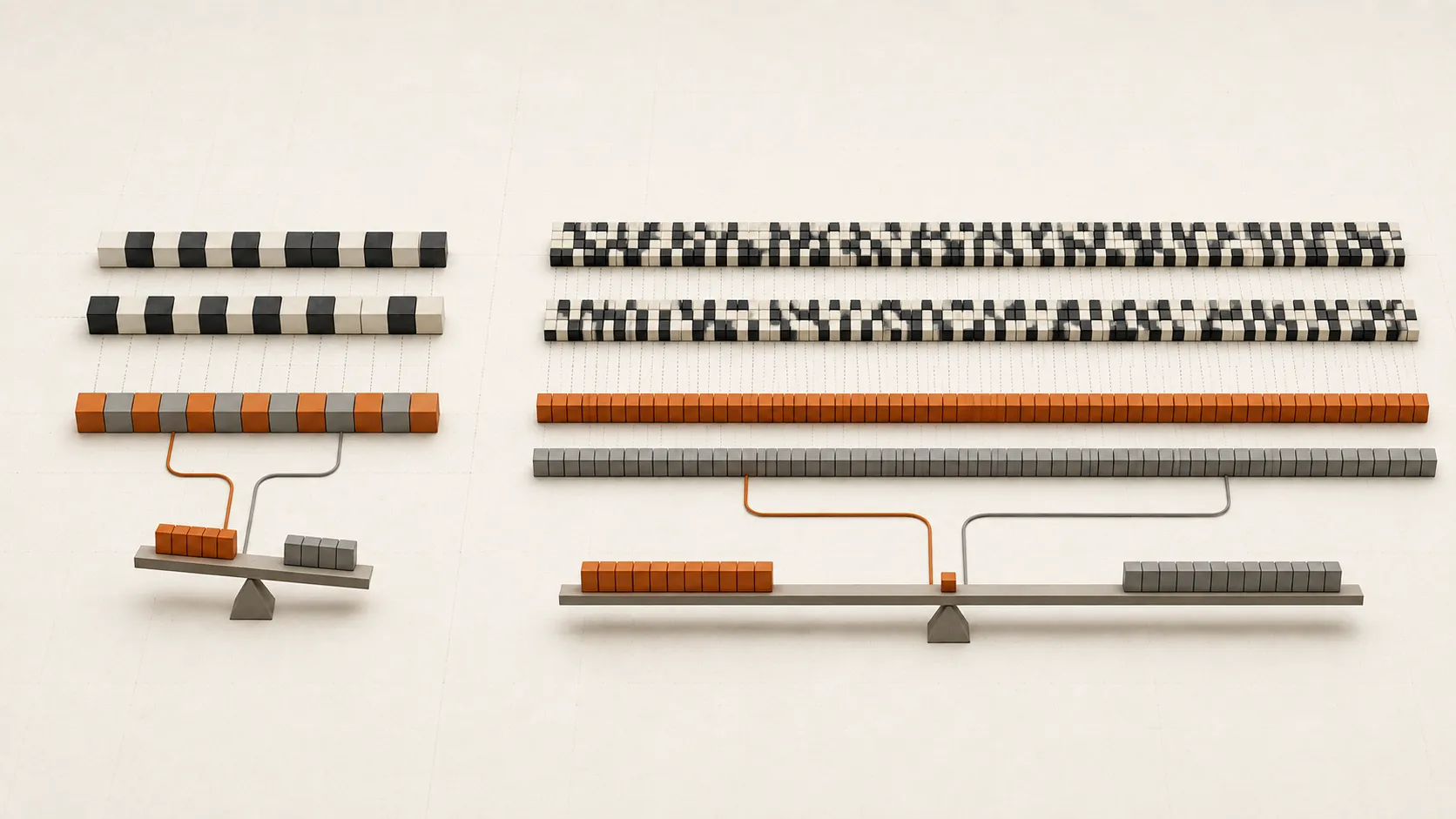
How Hyperdimensional Computing distributes information across an entire hypervector, helping representations degrade gradually under noise.
How the problem of representing structured knowledge in distributed systems gave rise to the family now known as HDC and VSA.
Contact
If you're working with connected data, retrieval, agent memory or online learning, we'd love to hear what you're building and where the current representation is falling short.
We usually reply within two business days.