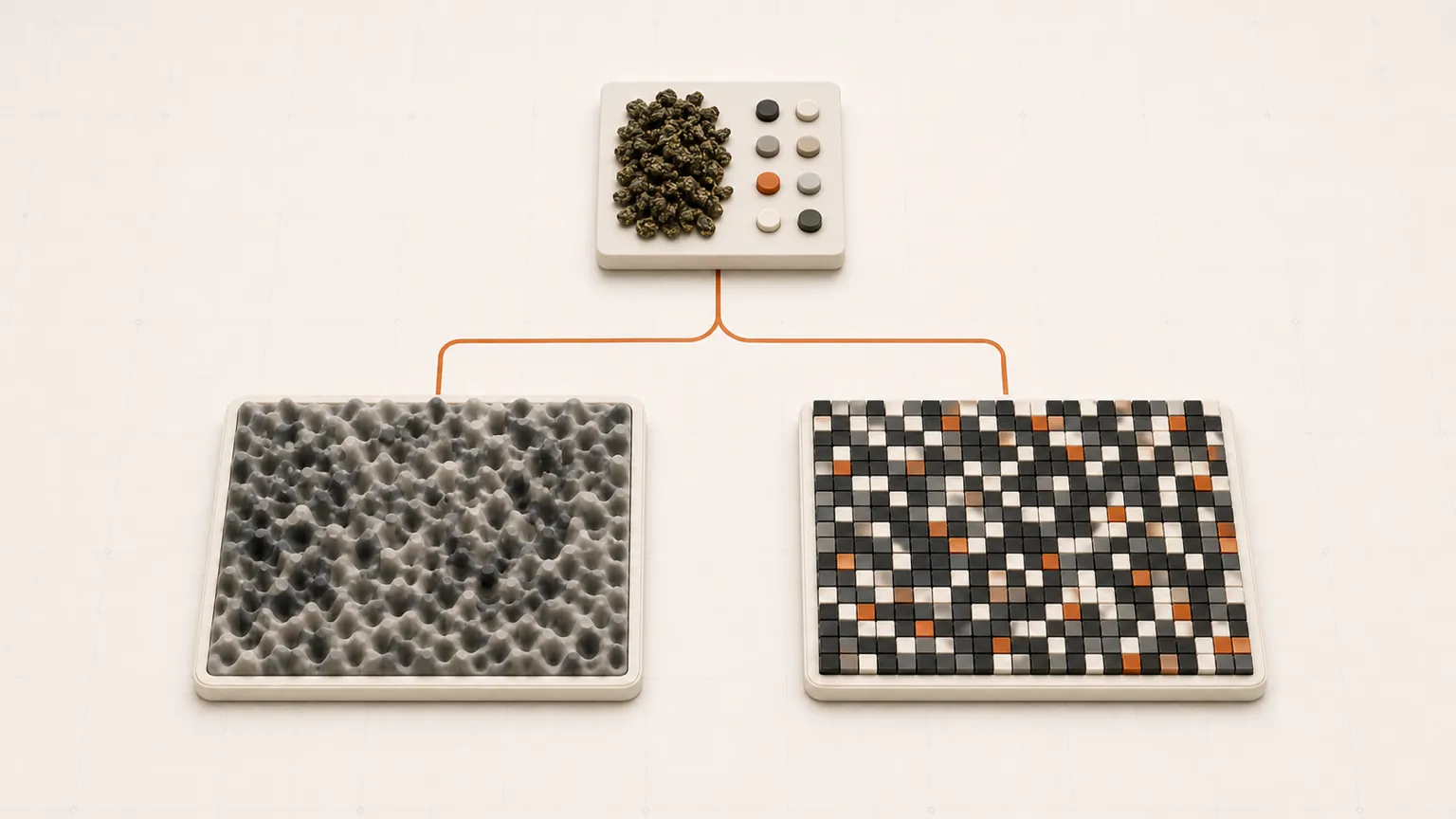

How context can change a retrieval ranking
Why shared bipolar binding preserves a ranking, how weighted similarity can change it, and what remains to be tested for useful retrieval.
Showing 11–20 of 26 posts
Why shared bipolar binding preserves a ranking, how weighted similarity can change it, and what remains to be tested for useful retrieval.
How a compact abstraction can use thousands of coordinates, and what the extra width buys an HDC system.
Learn how to encode node properties and edge direction with HDC, compose a partial query, and resolve similarity matches back to exact graph records.
A delayed sales order shows how searching connected patterns could help teams find useful past cases, then check the facts in a graph.
Five MAP experiments explore how bundled hypervectors support semantic retrieval, explainable scores, query preferences, and removal of known facts.
What a new neuroscience framework proposes about context, compression, and action, and how HDC could turn those ideas into a computational architecture.
A reproducible experiment that tests whether HRR and MAP preserve the same similarity structure in a shared encoder.
How HRR, BSC, and MAP implement the same broad VSA computation shape despite using different hyperspaces and mathematical operations.
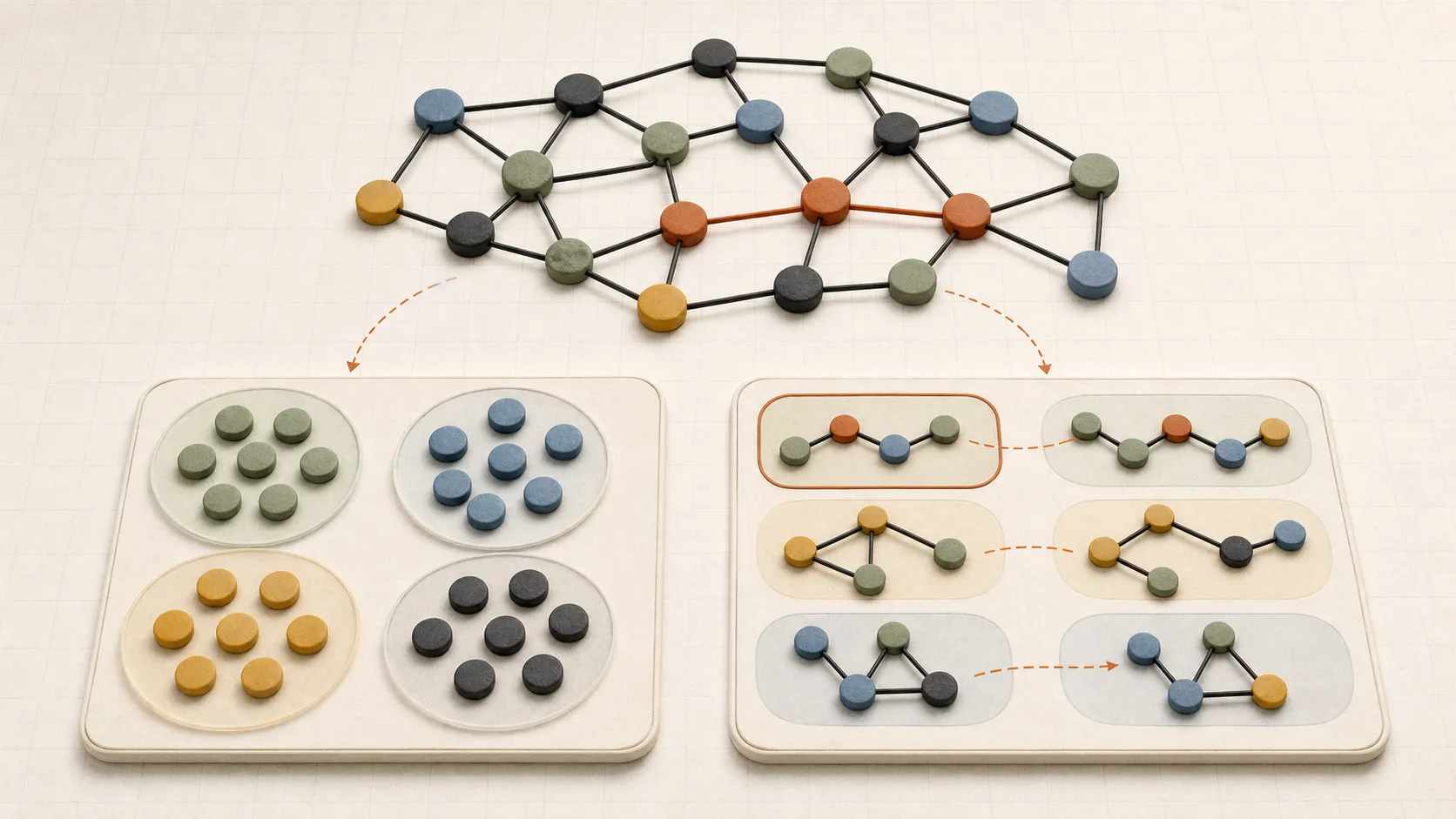
Graph search follows exact relationships, while associative search finds similar situations from incomplete examples.
Why the future of AI may be hybrid: deep learning learns powerful representations, while HDC complements it with compositional operations, associative memory, and lightweight adaptation.
Contact
If you're working with connected data, retrieval, agent memory or online learning, we'd love to hear what you're building and where the current representation is falling short.
We usually reply within two business days.